Understanding Oxfam's Global Inequality Report
14 May
Oxfam’s latest Global Inequality Report makes for troubling reading. Billionaire wealth increased by 16% in 2025. One in four people worldwide are facing moderate or severe food insecurity – a figure that has jumped 42.6% since 2015; this includes 92 million people in Europe and North America. Wages have stagnated while the costs of food, energy and housing continue to rise.
These figures describe the daily reality of workers in global supply chains.
A useful framing: the doughnut
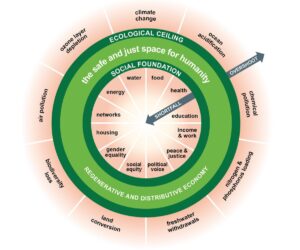
Kate Raworth’s doughnut economics model offers a clear way to understand what this data is showing. The model maps two boundaries. The inner ring represents the social foundation – the essentials everyone needs to live with dignity: food, housing, healthcare, education. The outer ring represents the planetary boundaries we cannot safely exceed. The space between is where thriving, sustainable societies are meant to exist.
Oxfam’s report shows how far below that inner boundary many workers have fallen. When people cannot afford adequate food and housing, they are not in the doughnut. They are falling through it.